YUANFONG PRESS
 HALLMARKORG


Views: 0 Author: Site Editor Publish Time: 2026-11-17 Origin: Site


The melamine paper and raw board (PB/chipboard/HDF/MDF/ plywood) are pressed together through short cycle press with high pressure,high temperature and short cycle time.the press machine also can press veneer&Phenolic film on MDF,chipboard,plywood.With different pressure,various of textures can be produced,such as glossy,matte,wood grain,marble etc.
For wood panel manufacturers and furniture producers, selecting the right pressing equipment is not simply about choosing a machine with higher tonnage. Pressing pressure, temperature uniformity, cycle time, board dimensions, automation, and production requirements all influence the quality and efficiency of the finished panels.
A short cycle hot press machine uses controlled heat and hydraulic pressure to bond resin-impregnated decorative materials to suitable substrates in a relatively short pressing cycle.
A short cycle hot press machine, also known as a short cycle laminating press or melamine hot press, is an industrial pressing system designed to laminate suitable resin-impregnated decorative papers onto wood-based panels.
During the pressing process, heated platens and hydraulic pressure activate and cure the resin system, forming a decorative surface bonded to the substrate.
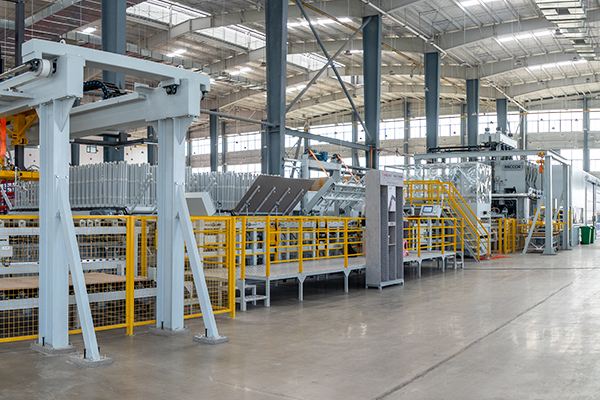
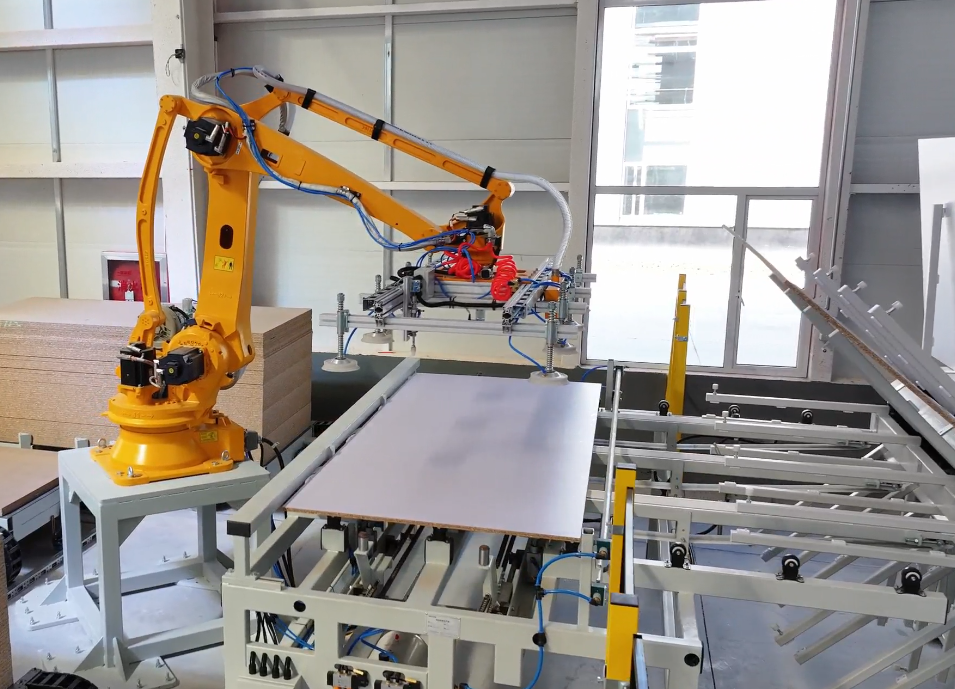
The machine is commonly integrated with board hooking,board laying machine,loading,press machine,unloading,trimming machine,cooling line etc equipment to create a complete automated production line.
The primary function of a short cycle press is to produce finished decorative surfaces on suitable panel substrates.
Common applications include:
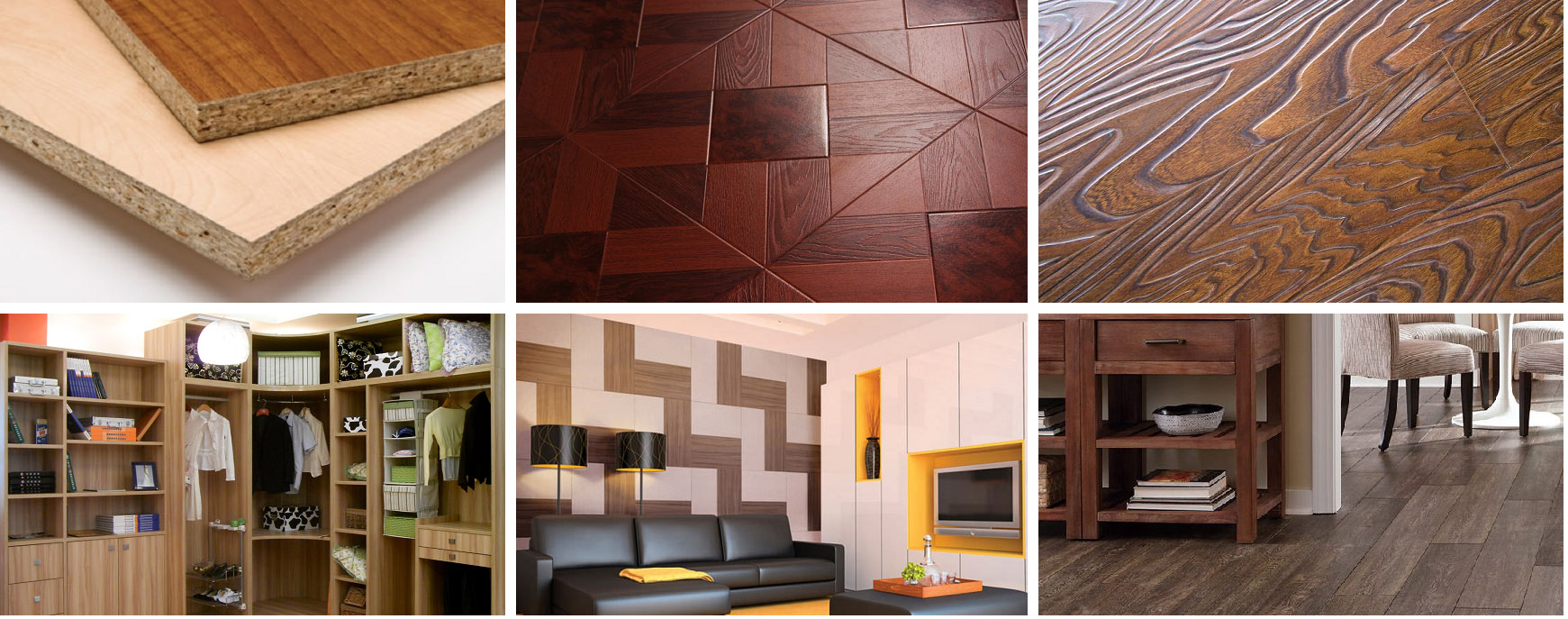
Melamine-faced MDF panels for furniture and cabinetry.
Melamine-faced particleboard for shelving and interior furniture.
Decorative wood-based panels for interior construction.
Certain HDF-based laminate flooring products.
Woodgrain, matte, textured, and other decorative finishes using compatible press plates and impregnated paper systems.
| Substrate | Applications |
| MDF | Furniture panels, cabinets, decorative boards |
| Particleboard | Furniture, shelving, interior panels |
| HDF | Certain laminate flooring products |
| Other engineered panels | Specialized decorative applications |
A short cycle hot press operates through a coordinated sequence of board laying, loading, pressing,unloading,unloading,trimming,cooling and stacking.
Step 1: Preparing MDF or Particleboard and Melamine-Impregnated Paper
The process begins with preparing the substrate and decorative paper.
The board should meet the required dimensional tolerances, surface quality, and moisture specifications. Dust, debris, and other contaminants should be removed before lamination.
The decorative paper must also be compatible with the substrate, pressing temperature, pressure, and curing conditions.
Poor preparation can result in surface contamination, bubbles, incomplete bonding, or visible defects after pressing.
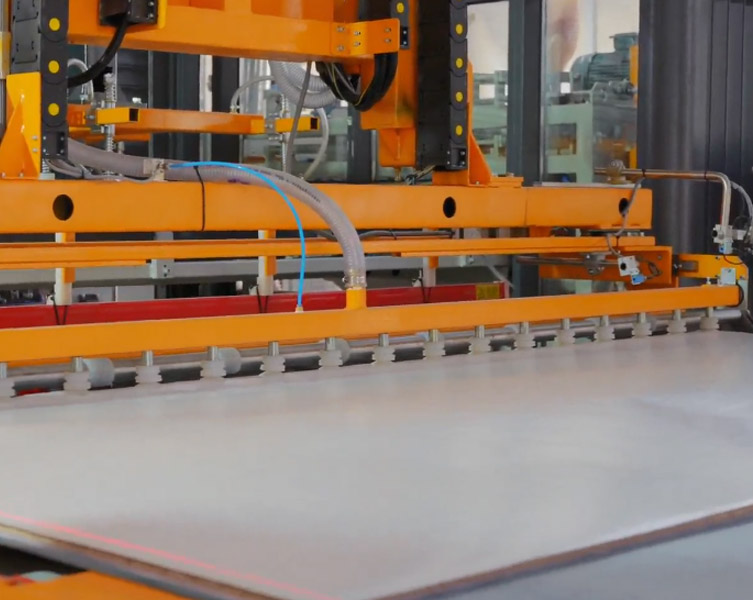
Step 2: Loading and Positioning the Panel and Decorative Paper
The board and decorative paper are positioned for pressing.
Depending on the production line, this process may be performed manually, semi-automatically, or through an automated loading and lay-up system.
Accurate positioning is important to prevent paper misalignment, wrinkles, and unnecessary material waste.
For double-sided lamination, the production system must be designed to position the required decorative materials on both sides of the substrate.
An automated positioning system can help reduce operator-dependent variation and improve the consistency of repeated production cycles.
Step 3: Hot Press Machine Hydraulic Pressure
Once the materials are positioned, the press closes and applies the required pressure.Heated platens transfer thermal energy through the press system to the decorative materials and board surfaces.
Three factors are particularly important:
Temperature:Must be compatible with the resin system and desired surface finish.
Pressure:Must be sufficient and appropriately distributed across the pressing area.
Time:Must allow the resin system to cure adequately under the selected conditions.
Step 4: Hot Press Opening, and Unloading
During the controlled pressing stage, the resin undergoes the required curing process and forms the decorative surface.The pressing time depends on factors such as resin formulation, board properties, heat transfer, and equipment configuration.
After the programmed pressing sequence is completed, the press opens and the laminated panel is removed.Complete cycle time includes additional operations such as closing, opening, and material handling.
Step 5: Cooling, Inspection, and Stacking
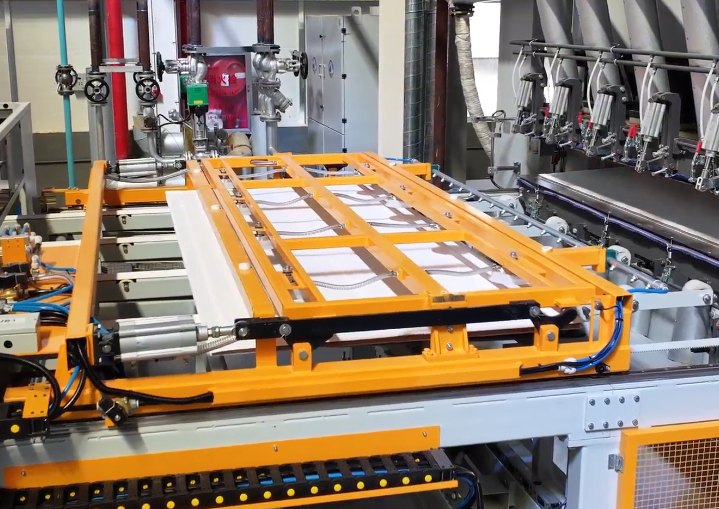
After pressing, the finished panel is transferred to the next production stage.
Depending on the process, cooling, inspection, and stacking may be performed using dedicated equipment.
Quality control should include inspection of:
- Surface appearance and texture
- Decorative paper positioning
- Visible bubbles or blisters
- Surface contamination and scratches
When selecting a short cycle laminating press, consider these five factors:
Panel Size and Material:Confirm compatibility with MDF, particleboard, HDF, and your required board dimensions.
Pressing Force:Choose the appropriate tonnage based on panel size and specific pressure requirements.
Production Capacity:Evaluate complete cycle time and expected panels per hour.
Automation Level: Select manual, semi-automatic, or fully automatic operation according to production needs.
Manufacturer Support:Check machine quality, installation services, spare parts, and technical support.
FAQs About Short Cycle Hot Press Machines
The complete cycle time depends on the equipment configuration, resin system, panel specifications, and handling sequence.
Press dwell time is not the same as total production cycle time. Buyers should request both figures and clarify whether capacity estimates include loading and unloading.
The required temperature depends on the specific melamine resin formulation, impregnated paper, substrate, and process design.
There is no universally correct temperature for all applications. Production settings should be established using material supplier guidance and validated pressing trials.
Yes, suitably designed short cycle press lines can laminate both sides of a compatible panel during the intended process.However, double-sided operation depends on the machine configuration, material lay-up system, and product structure.
The nominal pressing force is different, but the practical effect depends on the effective pressing area and equipment configuration.A 2000T press does not automatically provide better results for every panel format.The correct choice depends on required specific pressure, board dimensions, process conditions, and technical design.